
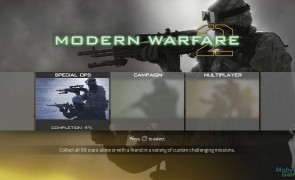
With its three divisions of mode, the main menu of 2009’s Call of Duty: Modern Warfare 2 signified a major shift in the videogame industry. Cooperative modes of play became a market-induced requirement of subsequent AAA shooter releases. The phenomenal success of Nazi Zombies in Call of Duty: World at War and Horde mode in Gears of War 2 in 2008 had revealed an audience hungry for the new modes of interaction offered by cooperative multiplayer gameplay. But why are cooperative modes of play so popular with players?
1. Players are encouraged to communicate with each other.
Anyone who has played competitive multiplayer in a Call of Duty or Halo game will tell you how little people actually communicate with each other. The complete lack of vocal communication negates the possibility for any teamwork, reducing the team to an uncoordinated mess of individual actors. In contrast, the complicated in-game scenarios of cooperative games like Portal 2 virtually require players to talk with each other. The recent release Monaco requires the cooperation of all four of a match’s players through a series of mechanics that have successfully warded off trolls. As noted by well-known independent games developer Andy Schatz, the “more intimate cooperative experience” offered by Monaco encourages a player’s tighter identification with his or her teammates. Who doesn’t like to have a nice chat with the bros over an afternoon zombie massacre?
2. Everyone wins.
Whereas competitive multiplayer only allows one team or player to win a match, the successful completion of a cooperative mode’s in-game scenario results in victory for all players. This push for common victory releases the player from any anxiety over his or her personal performance and focuses the gameplay experience around his or her efforts to cooperate with teammates.
3. Players interact with the same teammates for the session’s duration.
In the competitive multiplayer of series like Call of Duty and Gears of War, players are constantly leaving and joining games through a game’s matchmaking. This transitory mode of experience does not adequately allow for a player’s identification with his or her teammates. Cooperative modes of play only allow four players to interact with each other, and often do not allow the migration of new players into the game once a match has begun, allowing for players to better know each other.
4. In-game objectives encourage the refining of technique.
The inherently repetitious nature of wave-based game modes like the Halo series’ Firefight mode, the Call of Duty series’ Zombies game mode, and the Gear of Wars series’ Horde mode encourage players to actively develop and practice strategies for their continued in-game survival. Players are rewarded for experimenting and formulating a plan of attack against the opposing in-game elements.
Why do you enjoy playing cooperative modes, and who do you play them with? If given the chance, would you rather play a game’s campaign solo or cooperatively with other players? Comment below with your answers!
 0-1
0-1


Add One