

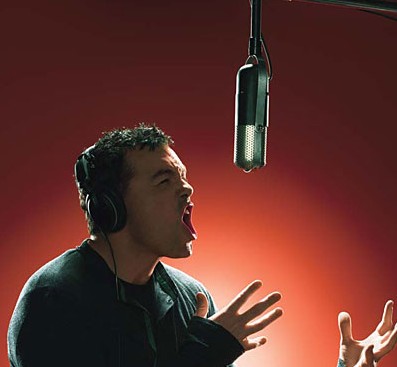
Remember when in-game dialogue was nothing but text? Chrono Trigger, Final Fantasy I-XI, Terranigma, Legend of Zelda…
Wait… LoZ games don’t have full on voice acting, even today. That doesn’t make it a bad or outdated game… Well, some people would say that it does.
Ever since it became possible to use voices easily in video games, every game HAD to have voices in it. It became such a big thing, that even Final Fantasy started doing it. And it sucked.
That’s the thing with voice acting. Good voice acting can make a game more immersive. Bad voice acting however, can entirely ruin the atmosphere.
A good example of that happening is Siren, a little survival horror for PS2. It has great atmosphere, terrifying enemies, a phenomenal plot… And hilariously bad English voice acting.
The game presents us with a bunch of Japanese characters in a Japanese village, speaking the best British English out there. If that wasn’t bad enough, the acting is flat and lifeless, as if the actors were merely reading the script and nothing more. And there goes the entire atmosphere.

“What the heck is this?”
The sad truth is that nowadays, people won’t really accept lack of voices in games very well. Zelda is the prime example of this. Every time a new game comes out, people will always moan about Nintendo still choosing to go full text for the dialogue, with some people even flat out refusing to buy the game because of this. When in reality, Zelda games never needed voice acting. The games are good and fun to play, and Nintendo knows how to flesh out characters. Using only facial expressions to convey character emotion, Nintendo creates more of a “Link” between the player and the characters on screen.
“Filling in the blanks” is a technique that is most effective when you seek to create a lasting effect. You read their words, you see their face, and hear maybe a grunt or two, and your mind makes up the rest.
The use of grunts and little sound cues allows the player to develop an idea of what the character sounds like, where the facial expressions and animation patterns allows the player to develop an idea of the emotion they’re trying to convey. This allows for universal character traits while creating a more personal relationship with such character.
It is a design choice that would not be possible if there was full voice acting.
In the end, voice acting does not make a game good or bad. It can be a great asset if it’s done well, but sometimes, it needs to take a backseat, allowing the player to personalize their experience – their own thoughts, feelings and emotions, through the use of their imagination.
 +10
+10


Add One